

The 6 traits of an ace Engineering Manager (2/2)
Recognize who qualifies.

This is “Effective Delivery” — a bi-weekly newsletter from The Software House about improving software delivery through smarter IT team organization.
It was created by our senior technologists who’ve seen how strategic team management raises delivery performance by 20-40%.
TL;DR
As a Deputy Head of Development, I co-manage 15 Engineering Managers (EMs),
They all have 6 critical skills in common,
Use my questions to screen potential EMs for their suitability.
Contents
🎊 Happy New Year!
Marcin here.
Last time, I explained when hiring an Engineering Manager makes sense.
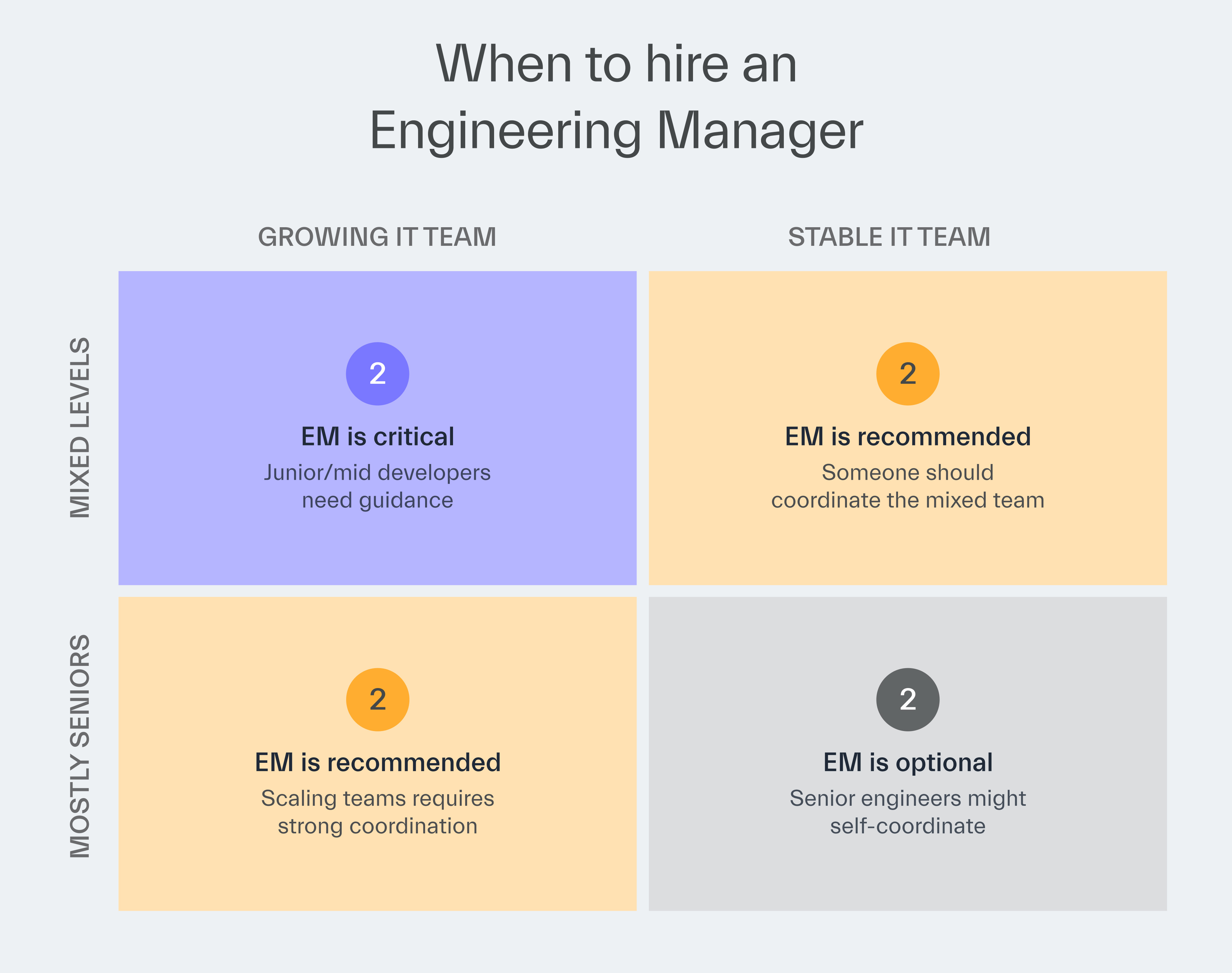
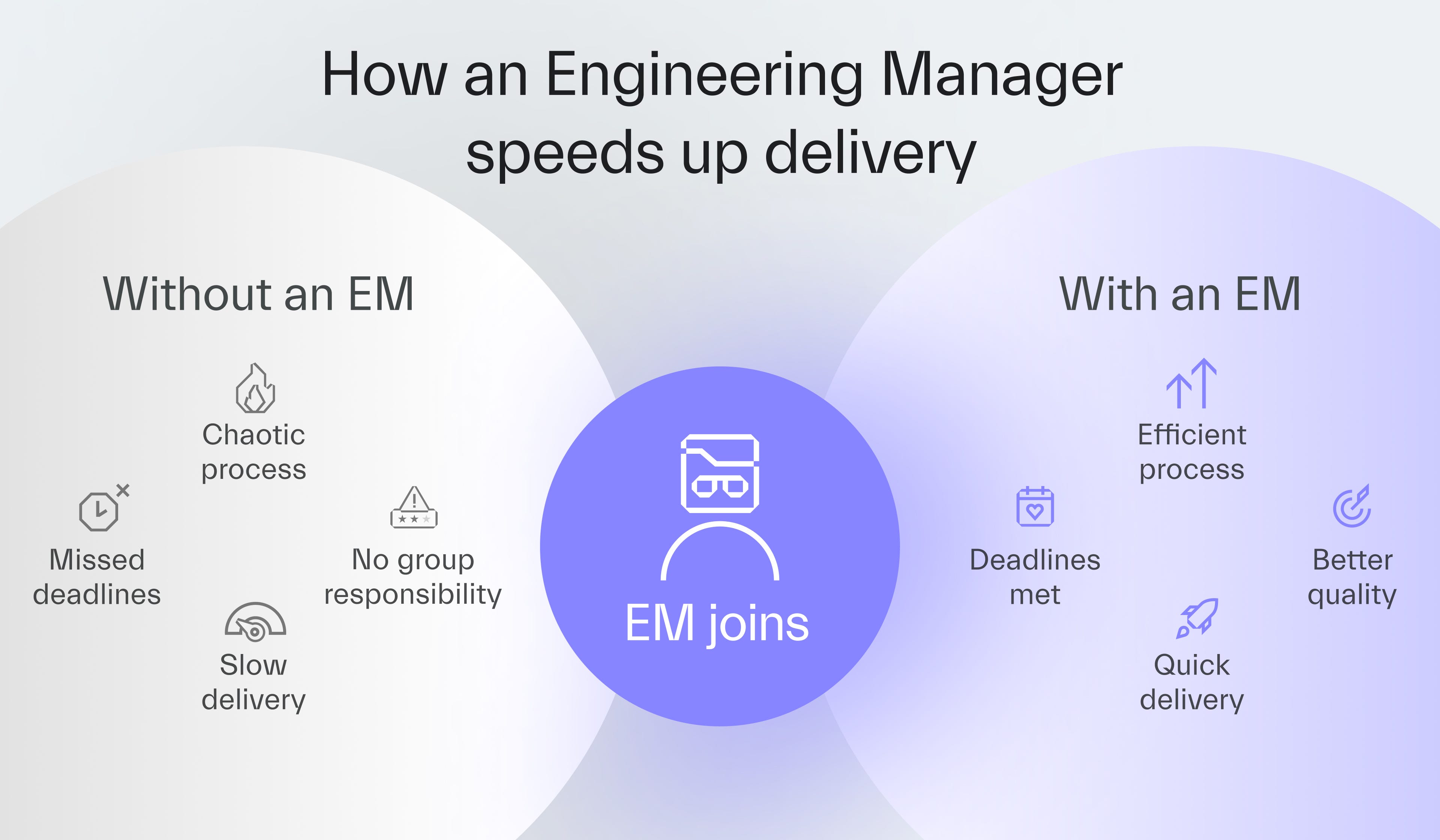
An EM helps maintain efficient delivery when developers struggle to self-organize or metrics slip.
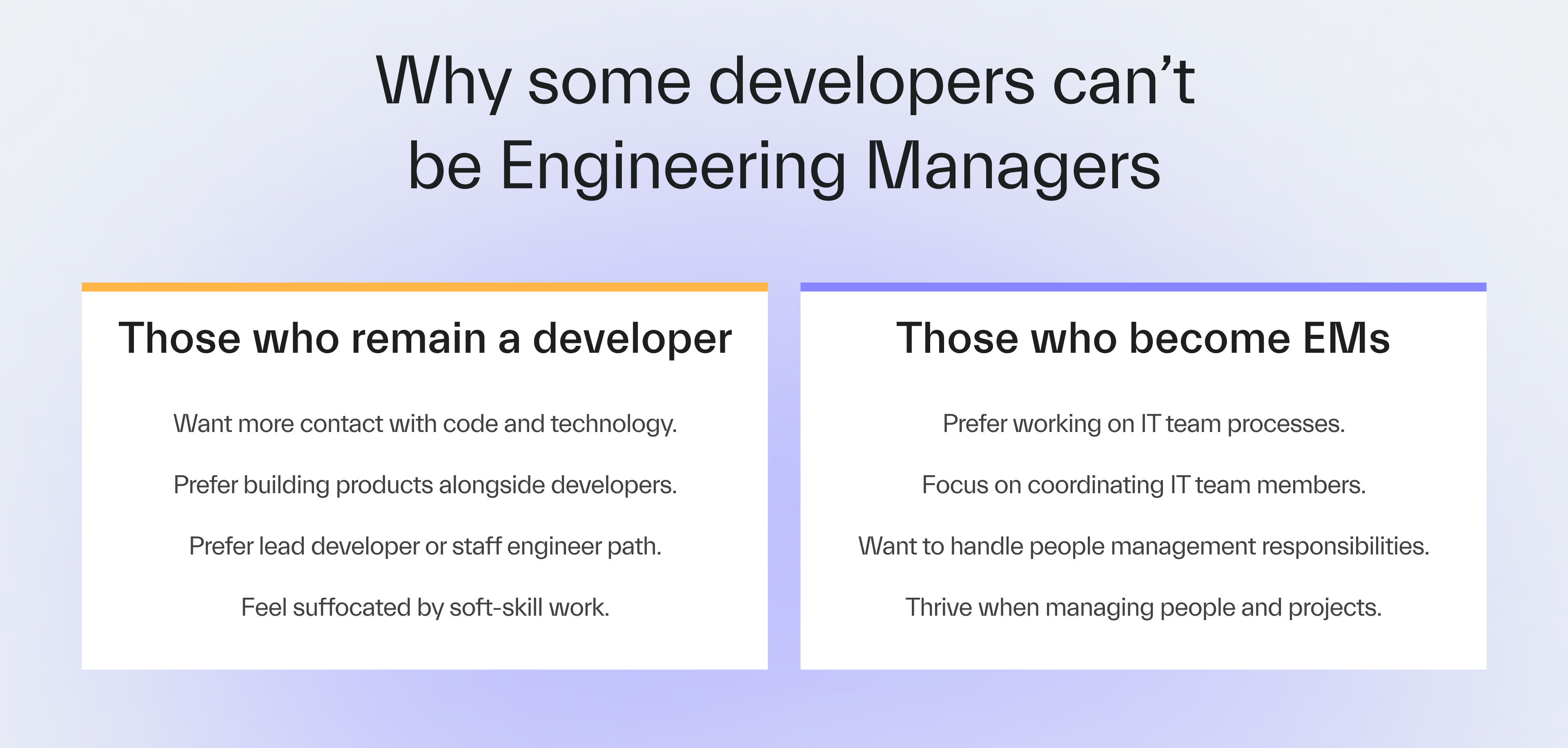
But this position requires a person of a specific character.
And it’s not necessarily the best engineer on the team.
Today, I’ll explain what I look for in an EM to avoid selecting an absent manager.
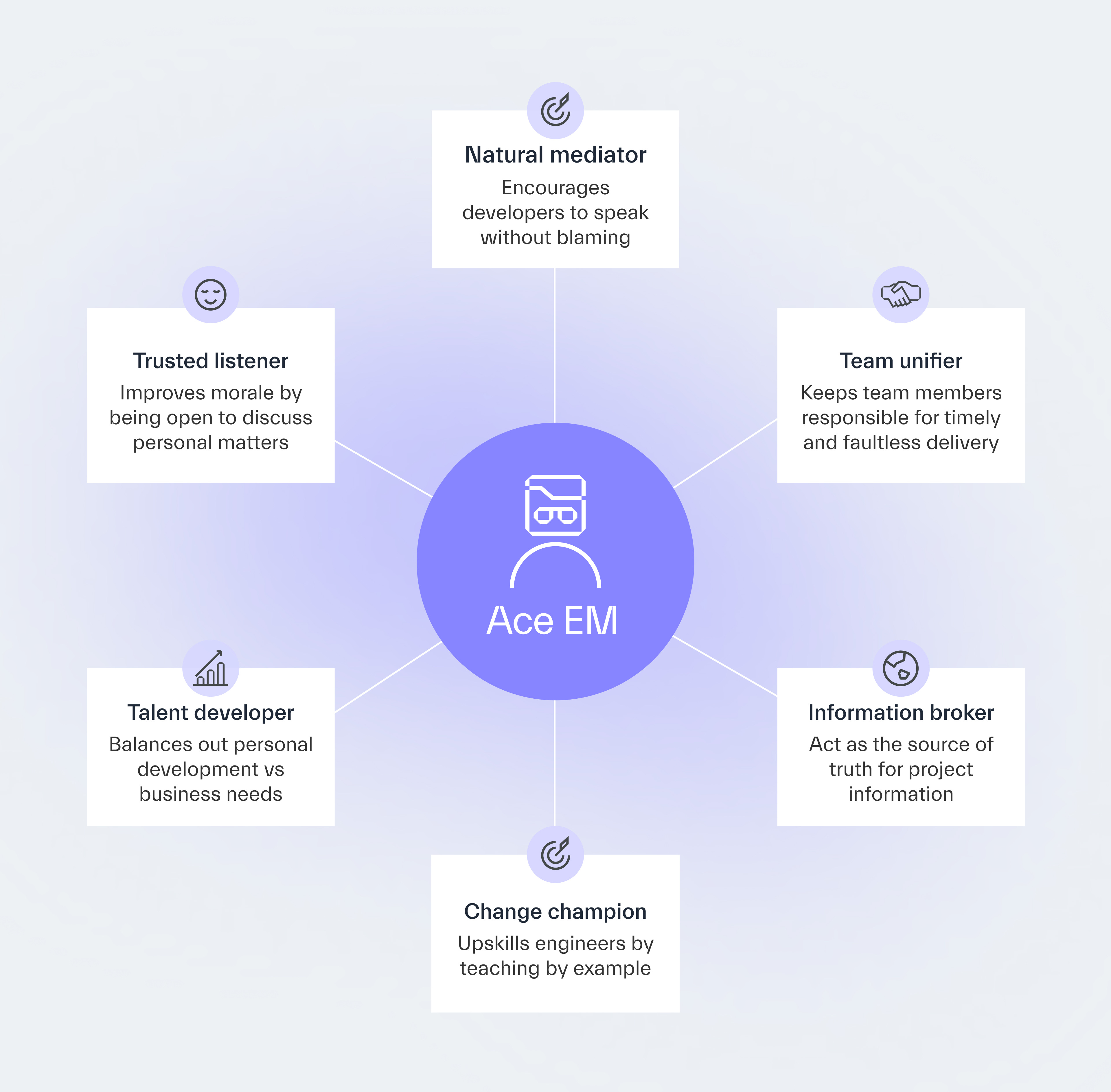
Recognize the 6 traits
The EM role demands more than a job title.
Some EMs never manage to boost development efficiency.
Then, they quickly realize that they don’t like that new role.
Here are the traits of an EM who loves their job but is loved back by the team.
1. Natural mediator
Many developers rarely share their observations.
They see a colleague delivering buggy code, but say nothing because criticizing feels uncomfortable.
You need an EM who is a feedback culture builder.
A good EM can empower developers with a communication style based on a framework such as FECE (Facts, Emotions, Consequences, Expectations).
FECE works as follows:
1. Facts
A teammate states an observed behavior.
2. Emotions
They go on to share how they were affected by it.
3. Consequences
They detail the implications of the behavior.
4. Expectations
They define the desired change.
Teams allowed to communicate this way refocus from blaming to looking for improvements for everyone.
2. Team unifier
Once people communicate openly, the EM can shape them into a cohesive unit.
A good EM functions like a sports coach.
They should have a good overview of the project beyond their field of expertise and assign tasks based on the strengths of the team members.
With an EM onboard, everyone can take equal responsibility for delivery.
Without one, developers work in tunnel vision, ignoring others’ tasks.
We promoted a strong developer into the EM role for a challenging project.
Despite the label, the person focused on architecture and functioned as a de facto lead developer.
One-on-ones happened rarely, and communication was siloed.
Eventually, they admitted that EM’s work was not what they wanted.
3. Information broker
The third trait is the ability to stay closely involved with the project.
In one project, managers skipped dailies, refinements, and code reviews.
They advised without understanding the current context, based on their experience from previous projects.
We added an EM who went deep into the codebase, eventually introducing changes that positively impacted delivery.
Being hands-on lets the EM introduce metrics that matter.
Measurements like lead time become meaningful only when one understands what influences the delivery time of each phase of the development cycle.
4. Change champion
Developers rarely have the regular time to self-improve.
An EM can support their growth as a micro-enabling team
They’re responsible for introducing new languages or frameworks and leading their adoption in line with business requirements.
I’d also expect that an EM can work through the resistance veteran engineers can have by being an accessible coding buddy.
5. Talent developer
Not every developer knows in which direction they want to go.
An EM helps each person find their path in a way that aligns with the organization’s goals.
For example, if a developer wants to try public speaking, the EM may suggest an internal lightning talk as a first step.
Turnover rate drops for teams with a manager who actually implements growth plans.
6. Trusted listener
In remote environments, developers often lack someone to discuss personal matters with.
An EM supports team members through difficult periods via one-on-ones.
They should be a trusted person who can listen without judgment.
Team members who feel heard are less likely to think about leaving.
When turnover decreases, institutional knowledge remains with the team for longer
Questions to ask
An introverted engineer who volunteers to be an EM probably won’t handle the weight of this role
The right candidate will more likely be already an ever-present supporter and the advisor of choice for many colleagues
I’d recommend using these 6 questions to vet out contenders.
How do you handle giving difficult feedback to a teammate?
Why (or why not) do you feel a sense of belonging with your teammates?
How do you stay up-to-date with the team’s daily activities?
Have you ever introduced a new practice in the department on your own?
How do you identify growth opportunities for people who don’t speak up?
What do you do when you sense someone struggling?
Each question refers to the specific trait explained above.
Record the candidate’s answer, and compare it with the descriptions from this issue.
Next time
Adam Polak will return with EDN#16.
He wants to tell you why any IT manager should be able to answer 80% of project questions without bothering their engineers.
Could you?
Anyway, I appreciate your time today 🙇
I’m wishing you an emptier work calendar in 2026.

Published with a smirk by The Software House
Twarda 18, Warsaw, Poland
tsh.io →
 | A guest post by
|